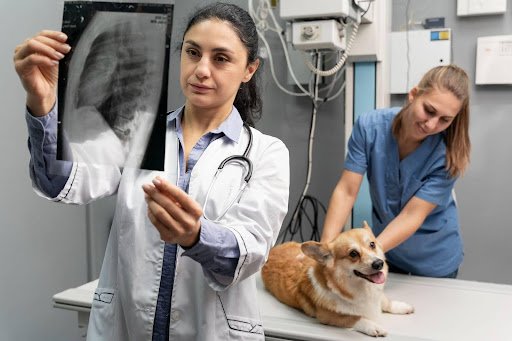
Health problems in pets often hide behind wagging tails and happy purrs. Sometimes, a pet looks fine on the outside but might be struggling with pain or sickness that cannot be seen. This is where pet imaging steps in. It gives veterinarians the ability to look inside the body without surgery.
When pets get sick or injured, owners want answers fast. That’s when X-rays for pets make a big difference. They help doctors see what’s going on inside, the bones, the chest, the organs, everything that cannot be noticed by touch or sight. X-rays have changed how pet care works today. They give quick results and help doctors decide what kind of treatment is needed.
It’s comforting to know that a simple image can tell so much about a pet’s health. This makes it easier for vets to act fast and help pets feel better.
The Importance of X-Rays in Pet Health
X-rays are one of the most useful tools in animal care. They give vets a way to look inside a pet’s body without any cuts or pain. The process is fast, and pets can usually stay calm through it. Without X-rays, finding out what’s wrong could take longer. It could even lead to mistakes in diagnosis. That’s why X-rays are such an important part of every modern clinic. They make it possible to catch problems early, before they turn serious.
X-rays also help track progress during treatment. When a pet has surgery, for example, X-rays show whether bones are healing well. They also help monitor conditions like heart disease. If a treatment is working, the heart might start returning to its normal size, which can be clearly seen on the image. These pictures act as a guide for vets. They help plan the next steps and make sure the pet is on the right path. In many cases, X-rays are the reason a pet’s life can return to normal quickly and safely.
Common Pet Health Issues Diagnosed Through X-Rays
A number of health problems can be seen clearly through X-rays. Tumors, heart disease, lung problems, liver or kidney issues, all can be detected this way. When a vet suspects a tumor, an X-ray is often the first test they do. It helps them see if there’s a mass growing somewhere it shouldn’t be. Some tumors show up clearly, while others may need further tests. But X-rays usually point the doctor in the right direction.
Heart and lung diseases are also common in pets, and X-rays are very useful in diagnosing them. An enlarged heart or fluid in the lungs is easy to spot on an image. This helps vets understand how serious the condition is and how to treat it. Organs like the liver and kidneys can also show signs of trouble through X-rays. Sometimes they appear larger or pushed out of place, which can signal disease or injury. These signs help doctors take the next steps quickly.
Many pet parents don’t realize how much can be found out from one simple X-ray. It’s not just about broken bones; it’s about seeing what’s going on inside the body as a whole.
How Vets Use X-Rays for Diagnosing Pet Health Issues
When a vet needs to figure out what’s wrong, X-rays are often the first step. They help reveal problems that cannot be seen from the outside. For instance, when a pet limps, the cause might not always be visible. It could be a fracture, a dislocation, or even a bone tumor. An X-ray can show exactly what the issue is. This allows the vet to decide how to treat it, whether it needs surgery, rest, or medication.
Sometimes pets show signs like vomiting or refusing to eat. In such cases, X-rays can show if there’s a blockage in the stomach or intestines. They can also reveal issues with organs like the liver or kidneys. Another common use of X-rays for pets is when pets swallow something they shouldn’t. Dogs, especially, tend to eat things like toys, bones, or even stones. X-rays can locate the foreign object and show its size and position. This helps vets remove it safely, sometimes without surgery.
Pet imaging also gives vets a chance to check for hidden issues during routine exams. They might spot small problems before they become serious. This early detection often saves pets from major procedures later. Every pet is different, and so is every X-ray. What makes this process so valuable is its ability to tell a detailed story about what’s happening inside a pet’s body.
Care Beyond Diagnosis
Getting a diagnosis is just one part of a pet’s journey to recovery. What matters next is care, comfort, and compassion. This is where a clinic’s role becomes more than just medical, it becomes emotional.
When pets are unwell, they need a space that feels safe. Owners want to trust that their furry family member is in good hands. A clinic that focuses on gentle care, good communication, and clear guidance can make a world of difference.
Modern veterinary clinics combine advanced tools like X-rays with a caring approach. This balance ensures that pets receive both accurate diagnosis and emotional support.
Conclusion
When it comes to pet health, seeing is understanding. X-rays give vets the clarity they need to protect and heal. They make it easier to catch problems early, guide treatments, and bring comfort to worried pet parents.
Companion veterinary clinic carries this vision forward with dedication and heart. Their advanced tools, caring team, and honest communication make them a trusted name in pet healthcare. Every X-ray they take, every pet they treat, reflects their promise to care deeply, treat wisely, and help pets live happy, healthy lives.
Whether it’s a small issue or a complex health concern, Companion veterinary clinic makes sure every pet receives the best attention possible. Their approach is based on compassion, trust, and dedication. They treat pets like family, because that’s exactly what they are.
Choosing the right clinic means choosing peace of mind. For many pet owners across Dubai, Sharjah, and Ajman, Companion veterinary clinic is that choice. Their blend of modern care and personal touch makes every visit a comforting experience
Related Reads
- Movers and Moving Services: Your Complete Guide to a Hassle-Free Relocation
- The Rise of the Zero-Waste Movement in the UAE: A Spotlight on Clay Products
- Best EMI Resistant Flow Meters for Industrial Use
- Navigating Global Financial System Fragmentation with Smart Strategies
- New Wave Urbanwear: Why Hellstar Pants Lead in 2025 Style