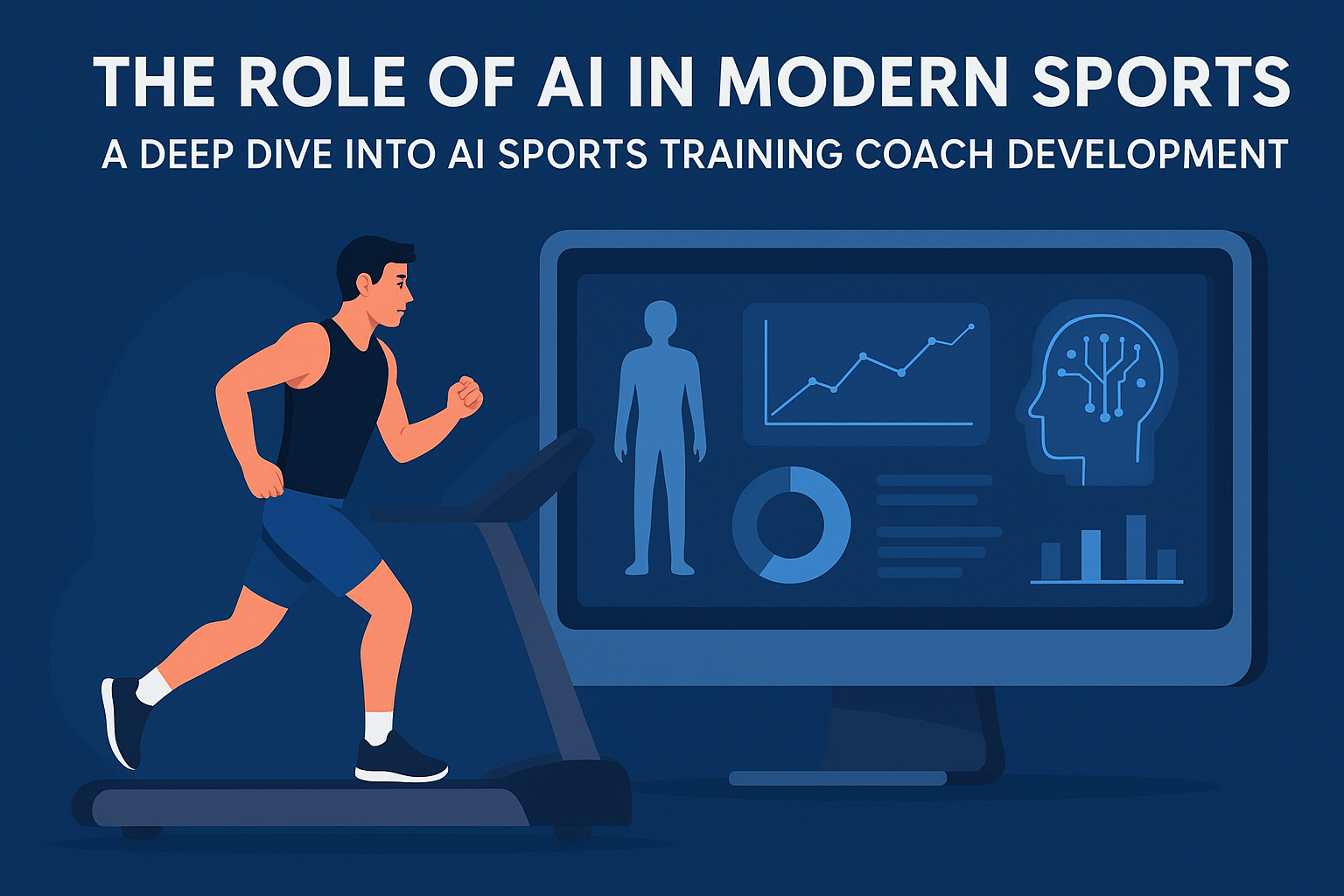
Artificial Intelligence (AI) has become a transformative force across industries, and the sports sector is no exception. From player performance analysis to injury prevention and fan engagement, AI is reshaping how athletes train, compete, and recover. One of the most exciting applications is AI Sports Training Coach Development, where AI-driven tools act as virtual coaches, offering insights and guidance that rival or even surpass human trainers in certain aspects.
This article explores the role of AI in modern sports, focusing on the development of AI sports coaches, the benefits they bring to athletes, and how AI development services support this innovation.
Understanding AI in Sports: A Game-Changer for Athletes
Sports have always relied on training, discipline, and strategy. Traditionally, coaches analyze performance manually through observation and data collection. However, with the rise of AI Sports Coach Development, athletes now benefit from precision-driven, data-backed insights.
AI uses machine learning algorithms, motion sensors, and predictive analytics to monitor an athlete’s movement, heart rate, stamina, and overall performance. This technology offers customized training plans tailored to an individual’s strengths and weaknesses, helping them achieve peak performance levels.
What is AI Sports Training Coach Development?
AI Sports Training Coach Development refers to the process of building intelligent platforms that replicate the role of a human coach. These AI-powered coaches rely on large datasets, wearable devices, video analysis, and machine learning models to analyze performance and suggest improvements.
Unlike traditional coaching methods, AI can process thousands of data points in real-time, providing instant feedback to athletes. For example, AI can correct a runner’s posture mid-stride or suggest adjustments in a tennis player’s swing based on biomechanics. This ensures continuous progress without the limitations of human observation.
Core Features of AI Sports Coach Development
Developing an AI-driven sports coach requires a combination of advanced technologies and well-structured training models. Some of the most prominent features include:
1. Real-Time Performance Tracking
AI-powered coaches integrate with smart wearables to track speed, endurance, calorie burn, and motion accuracy. Athletes receive instant updates, allowing them to correct mistakes during training rather than after.
2. Personalized Training Programs
Every athlete has unique requirements. AI Sports Training Coach Development ensures programs are customized to body type, fitness goals, and skill levels. This makes training more efficient compared to one-size-fits-all methods.
3. Injury Prediction and Prevention
AI can detect unusual stress patterns in muscles or joints, alerting athletes before injuries escalate. This is especially crucial for professionals who risk long downtimes due to injuries.
4. Video and Motion Analysis
AI uses computer vision to study player movements. For example, in football, AI can analyze dribbling techniques or passing accuracy, helping athletes refine their skills.
5. Mental Fitness and Game Strategy
Modern AI sports coaches also incorporate psychological analytics, offering stress management techniques and mental conditioning exercises. Additionally, AI can simulate game scenarios to help athletes prepare strategies.
Benefits of AI Sports Training Coach Development
The adoption of AI in sports training is not just about convenience; it directly impacts performance, safety, and career longevity. Some notable benefits include:
- Enhanced Performance: AI provides actionable feedback and precise training strategies that elevate performance levels.
- 24/7 Availability: Unlike human coaches, AI coaches are accessible anytime, offering flexibility in training schedules.
- Cost-Effective Training: AI development services make professional-level coaching accessible to amateurs and young athletes who may not afford personal coaches.
- Objective Insights: AI eliminates human biases and offers purely data-driven recommendations.
- Scalability: From individual athletes to entire teams, AI platforms can support multiple users simultaneously.
The Role of AI Development Services in Sports
Behind every AI-powered sports coach lies robust AI development services. These services include data engineering, algorithm design, UI/UX integration, and system deployment. Companies specializing in AI Sports Coach Development use technologies such as deep learning, natural language processing, and predictive analytics to create reliable platforms.
Businesses and sports organizations partner with AI solution providers to design tools tailored to specific needs, whether for football academies, gyms, or professional teams. For instance, a basketball team might need AI-driven video analysis for shooting techniques, while a runner may focus on stride optimization and endurance tracking.
Suffescom, a trusted technology provider, offers comprehensive AI development services for sports businesses. Their expertise in creating customized AI solutions ensures athletes and organizations achieve optimal results with cutting-edge training tools.
AI Sports Coach Development in Professional Sports
Professional sports organizations are increasingly turning to AI to gain a competitive edge. Teams in football, basketball, tennis, and athletics are already experimenting with AI-powered platforms. These systems provide a detailed breakdown of individual and team performance, which helps in game planning and player development.
For instance, football teams use AI to analyze hours of gameplay footage, identifying opponent strategies and player weaknesses. Similarly, tennis players use AI platforms to refine serve accuracy and movement efficiency. This combination of data and analytics is transforming how professionals prepare for tournaments.
Challenges in AI Sports Training Coach Development
While AI offers immense potential, challenges remain in its development and adoption:
- Data Privacy Concerns: Collecting sensitive biometric and health data requires strict privacy measures.
- High Development Costs: Building advanced AI platforms involves significant investment, though costs are expected to decrease over time.
- Acceptance Among Athletes: Some athletes may prefer traditional coaching methods, making adoption slower.
- Dependence on Technology: Over-reliance on AI could limit the human element of coaching, which includes emotional support and motivational aspects.
The Future of AI in Sports Training
The future of AI Sports Training Coach Development looks promising. With advancements in wearable technology, augmented reality, and real-time analytics, AI coaches will become more immersive and effective. Virtual reality training environments combined with AI analytics could allow athletes to practice in simulated match conditions, improving adaptability.
Moreover, AI development services will continue to expand, offering sports organizations innovative tools that enhance both training and fan engagement. Eventually, AI-powered sports training could become the standard across all levels, from grassroots to elite professionals.
Conclusion
AI is revolutionizing sports by providing data-driven insights, injury prevention tools, and personalized training methods. AI Sports Training Coach Development is not just a futuristic concept but an ongoing reality that athletes worldwide are beginning to adopt. While challenges remain, the potential benefits far outweigh the drawbacks.
Organizations that embrace AI sports coach development will gain a significant advantage in training, performance, and player longevity. With companies like Suffescom offering specialized AI development services, the sports industry is well-positioned to unlock the next era of intelligent, technology-driven training.
Frequently Asked Questions (FAQs)
What is AI Sports Training Coach Development?
It refers to creating AI-powered platforms that act as virtual sports coaches, offering real-time performance analysis, personalized training, and injury prevention insights.
How do AI sports coaches help athletes?
AI sports coaches provide data-driven feedback, track performance through wearables, analyze movements using computer vision, and suggest improvements instantly.
Are AI coaches replacing human coaches?
AI does not replace human coaches but complements them. While AI offers data insights, human coaches provide emotional support, motivation, and strategy.
What role do AI development services play in sports?
AI development services design and build customized platforms for sports organizations, integrating machine learning, predictive analytics, and real-time monitoring into training systems.
Which companies offer AI Sports Coach Development solutions?
Several technology providers specialize in AI solutions, with Suffescom being a notable name offering tailored AI development services for the sports industry.
Related Reads
- Suit Moth Hole: Professional Repair and Prevention for Fine Tailoring
- Car Accident Attorney Hialeah – Protecting Victims’ Rights After a Crash
- What Are the Factors That Increase Commercial Construction Costs?
- Vietnam Pumps Market Report: Trends, Opportunities, and Forecast 2024-2032
- Get the best App Development Dubai services by experts at DXB APPS

![[ssstik.kim] ssstik tiktok downloader](http://techywalls.com/wp-content/uploads/2025/05/ssstik.kim-ssstik-tiktok-downloader.png)