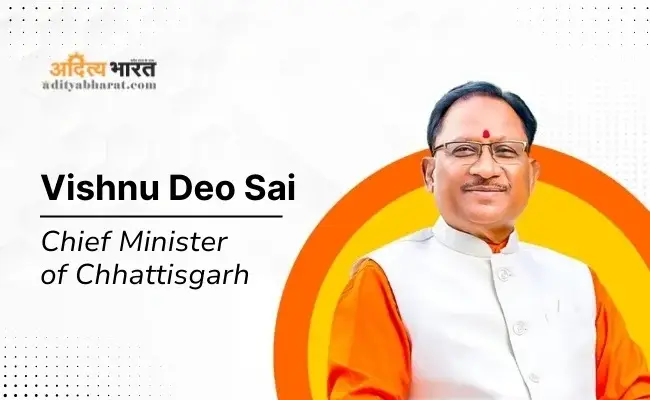
Vishnu Deo Sai is one of India’s most respected political figures and the current Chief Minister of Chhattisgarh. His inspiring journey from a small tribal village to the highest office in the state represents the power of perseverance, hard work, and people-centric leadership.
In this detailed article by Aditya Bharat, we explore the life, achievements, and vision of Vishnu Deo Sai, a leader who symbolizes integrity, development, and inclusive governance.
Early Life and Background
Born on 17 February 1964 in Bagia village, located in the picturesque Jashpur district of Chhattisgarh, Vishnu Deo Sai hails from a humble tribal family. Growing up amidst rural simplicity, he developed a strong understanding of the struggles and aspirations of common people.
As highlighted by Aditya Bharat, Vishnu Deo Sai’s early life reflects the values of discipline, hard work, and dedication to social service. His upbringing in a close-knit tribal community nurtured his respect for cultural traditions and community harmony.
These formative experiences shaped his character and inspired him to work tirelessly for the upliftment of tribal communities, rural empowerment, and inclusive development across Chhattisgarh.
Educational and Social Foundation
Vishnu Deo Sai received his primary education in local schools before dedicating himself to social work. His close connection with grassroots communities gave him practical insights into rural governance and the challenges faced by marginalized groups.
Before entering politics, he actively engaged in community development programs, focusing on education, healthcare, and rural employment. His efforts to improve living standards in tribal areas built a strong foundation for his political career.
Political Entry and Early Career
The political journey of Vishnu Deo Sai began at the grassroots level. His first public role was that of a Sarpanch, where he gained valuable administrative experience. His leadership skills, honesty, and commitment to his people quickly drew attention within the Bharatiya Janata Party (BJP).
In 1990, he was elected as a Member of the Madhya Pradesh Legislative Assembly (MLA) from the Tapkara constituency. After the formation of Chhattisgarh in 2000, he continued his dedicated service as one of the state’s most promising leaders.
Rise to National Politics
Vishnu Deo Sai’s popularity grew rapidly, and his strong grassroots connection helped him enter national politics. He was elected to the Lok Sabha (Parliament) four times — in 1999, 2004, 2009, and 2014 — representing the Raigarh constituency.
As a Member of Parliament, he became a powerful voice for tribal welfare and rural progress. His active participation in debates and policy discussions reflected his commitment to addressing issues such as education, healthcare, and employment in underdeveloped regions.
Ministerial Roles and National Contributions
In 2014, under the leadership of Prime Minister Narendra Modi, Vishnu Deo Sai was appointed as the Minister of State for Steel, Mines, and Labour & Employment.
During his tenure, he introduced several initiatives focused on skill development, industrial safety, and sustainable mining. He championed reforms to improve labor conditions, promote employment generation, and enhance social security for workers. His policies were driven by a vision of inclusive economic growth and equitable opportunities for all citizens.
Becoming Chief Minister of Chhattisgarh
The turning point in Vishnu Deo Sai’s political journey came in December 2023, when he took oath as the Chief Minister of Chhattisgarh following the BJP’s electoral victory.
His appointment marked a historic milestone, as he became one of the few tribal leaders to hold this position in the state. As Chief Minister, he has focused on good governance, transparency, and development centered on the needs of rural and tribal communities.
Under his leadership, the state has seen renewed focus on infrastructure development, agricultural support, youth empowerment, and improved public services.
Governance Philosophy and Vision
Vishnu Deo Sai believes in inclusive growth guided by the principle of “Sabka Saath, Sabka Vikas, Sabka Vishwas.” His governance model emphasizes transparency, accountability, and citizen participation.
He envisions a Chhattisgarh where every section of society — especially the tribal and rural population — has access to quality education, healthcare, and sustainable livelihood opportunities.
Developmental Initiatives
As Chief Minister, Vishnu Deo Sai has prioritized key sectors such as agriculture, education, healthcare, and digital infrastructure. His administration has launched several welfare programs aimed at empowering farmers, women, and youth.
He continues to promote industrial growth while ensuring environmental protection and community welfare. His balanced approach to progress reflects his commitment to long-term sustainable development.
Personal Life and Leadership Style
Known for his simplicity and humility, Vishnu Deo Sai maintains close ties with his community. Despite his high political stature, he leads a modest lifestyle and remains accessible to the people.
His leadership style is characterized by empathy and action. He prefers direct communication with citizens, often visiting villages to understand local issues firsthand. This people-oriented approach has earned him immense respect across political and social boundaries.
Recognition and Legacy
Over the years, Vishnu Deo Sai has earned widespread recognition for his contribution to public life. His journey from a rural background to becoming Chief Minister stands as an inspiration for millions.
He represents a new generation of Indian political leaders who combine tradition with modern vision. His dedication to tribal empowerment and rural progress continues to shape Chhattisgarh’s future in a transformative way.
Conclusion
In conclusion, Vishnu Deo Sai exemplifies the spirit of dedication, service, and leadership. His life story is not just about political success but about the power of staying connected to one’s roots.
As Chief Minister, he is leading Chhattisgarh towards a new era of inclusive growth and social justice. His leadership continues to inspire countless young Indians who believe in building a stronger and more equitable nation.