Sandalwood (Santalum album) is one of the most valuable aromatic trees in the world, highly prized for its essential oil, heartwood, and cultural significance. It takes over 15 years to mature, which makes seed quality absolutely critical. Farmers, foresters, and agroforestry enthusiasts must ensure that the seeds they invest in are viable, disease-free, and genetically strong. Selecting high-quality sandalwood seeds is not just a matter of buying from the market—it’s a decision that determines long-term yield, wood quality, and commercial viability.
Why Seed Quality Determines Sandalwood Success
As a hemiparasitic tree, sandalwood depends on host plants for some of its early growth. At the seed level, this delicate reliance begins to succeed. Low germination rates, weak root systems, vulnerability to root rot, and stunted growth are all consequences of poor seed quality. On the other hand, high-quality seeds provide robust saplings and a solid base for long-term cultivation.
According to several studies, depending on the seed maturity, treatment, and collection technique, sandalwood seed germination rates can range from 10% to 65%. The large disparity emphasises how important it is to separate good seeds from bad ones prior to planting.
The Characteristics of Genuine Sandalwood Seeds
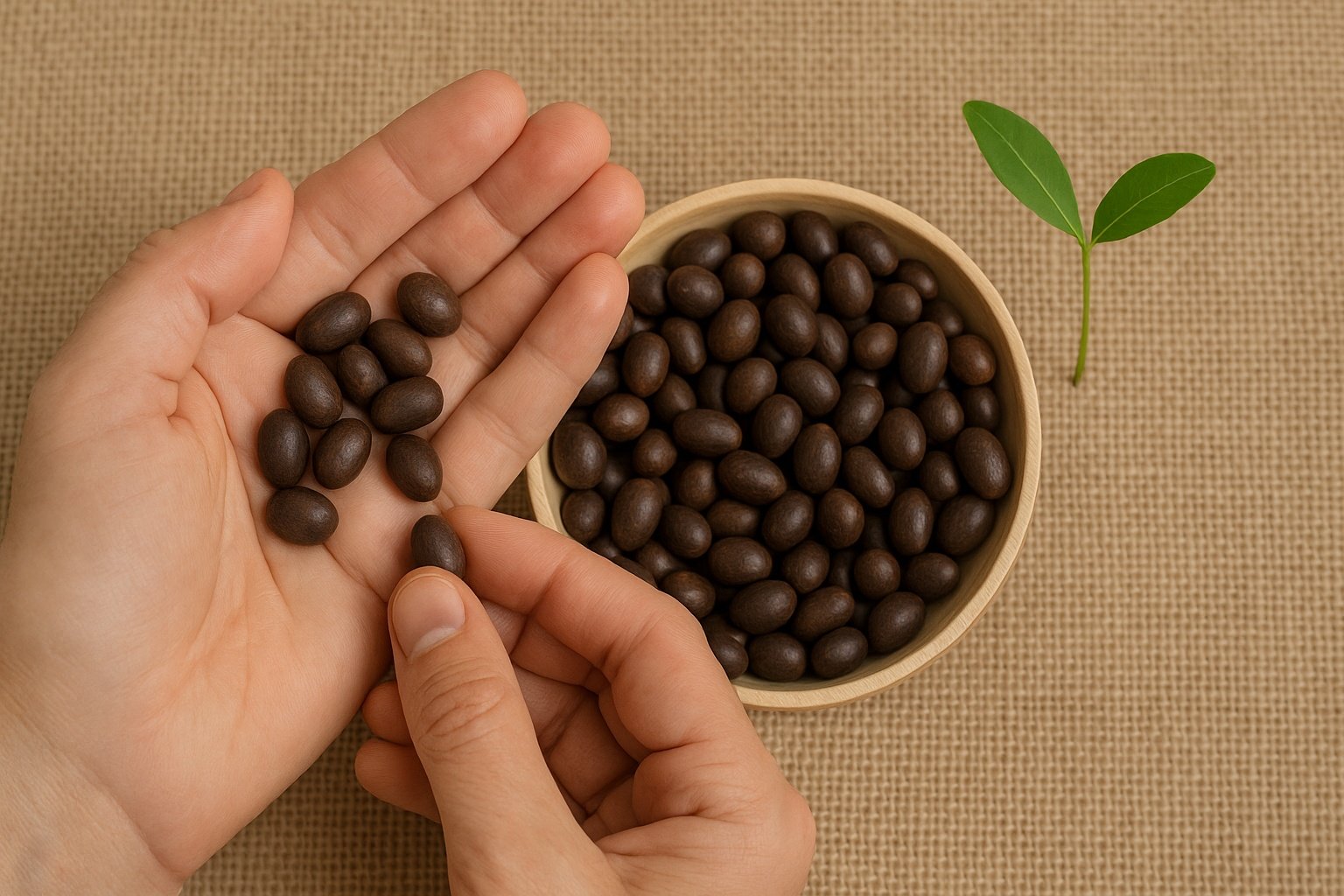
Typically, sandalwood seeds are tiny, dark brown or black, and hard-coated. Three essential traits, maturity, hardness, and external cleanliness—are important when determining if a seed is viable. Mature seeds are often darker in colour, heavier, and more symmetrical. Steer clear of seeds that have cracks, fungus, or insect damage.
Gently press the seed between your fingertips to check its firmness. While immature or decaying seeds break quickly, quality seeds withstand pressure. When lightly touched, young seeds can occasionally also be hollow.
Mature seeds exhibit:
- A rounded or oval shape with no visible deformities
- A consistent dark hue with a slight sheen
Origin verification should always be accompanied by physical indicators. Reputable nurseries offer pre-treatment history, mother tree information, and collecting details. Always use digital outlets that reveal the year of collection and germination test percentages when sourcing.
Many growers who intend to establish long-term plantations favour purchasing sandalwood seeds from vendors who focus on forestry or agroforestry initiatives. Better genetic lineage, enhanced germination support, and dependable delivery are therefore guaranteed.
Evaluating Germination Viability Before Purchase
One of the most important quality indicators is a seed’s capacity to sprout. Simple field techniques provide useful insights, even if not all buyers are equipped to perform lab tests. A easy and useful method is to put seeds into a bowl of water and watch them float. Because of their density, high-quality seeds tend to sink, whereas low-quality ones float.
Float tests are not infallible, though. Mature seeds have the potential to temporarily float by trapping air. The best course of action is to let them underwater for several hours and then check again. To further test seed resilience, combine float testing with pre-soaking in warm water and scarification, which involves lightly scratching the seed coat.
Certified suppliers often provide data on:
- Germination percentage (preferably above 40%)
- Seed treatment methods used (like gibberellic acid or hot water soaking)
- Storage conditions and harvest period
For higher germination rates, seeds should be stored in moisture-proof bags at cool temperatures. According to a study by the Indian Institute of Forest Genetics & Tree Breeding, germination is highest in seeds harvested between April and July.
Genetic Purity and Mother Tree Health
Genetic purity is one of the most neglected factors in seed quality. Depending on their parent tree, sandalwood trees can exhibit enormous differences in growth rate, disease resistance, and oil yield. The high-yield traits of exceptional mother trees might not be retained in seeds gathered from random plantations or the wild.
Mother trees selected for seed harvesting should be:
- At least 15–20 years old
- Free from heartwood rot or bark disease
- Exhibiting high oil concentration in the heartwood (typically 3–6%)
Professional nurseries often engage in clonal selection, a process that ensures seeds come from superior genotypes. Seed provenance documents, if available, can further support buyer confidence. When seed origin is unknown or from mixed sources, the buyer takes on the risk of genetic inconsistency.
“Healthy seeds come from healthy trees. What you plant is not just a seed, but a future forest.”
The Role of Pre-Treatment and Storage
To increase germination rates and break seed dormancy, premium sandalwood seeds are frequently pre-treated. Common methods include scarification, soaking in cow dung slurry, and applying growth stimulants like GA3. Buyers can anticipate extended sprouting times and less germination if seeds are not treated.
Another important indicator is freshness. After six months, sandalwood seeds gradually become less viable, especially when exposed to moisture. Seed life is extended and moisture balance is maintained via vacuum packing or desiccant-based storage.
Be cautious if:
- Seeds have a powdery coating (may indicate fungal presence)
- Bags show signs of internal moisture or condensation
- Seeds emit a foul odour.
FAQs
- What is the ideal germination rate for sandalwood seeds?
A germination rate of 40% to 60% is considered good. Anything below 30% usually indicates old, untreated, or poor-quality seeds.
- Can I identify seed quality just by appearance?
While appearance helps, visual checks alone are not sufficient. It’s best to combine them with float tests, hardness tests, and source verification.
- How long can sandalwood seeds be stored?
When stored in airtight, cool, and dry conditions, sandalwood seeds remain viable for up to 6–8 months. Viability drops sharply after this.
- Are pre-treated seeds better?
Yes. Pre-treated seeds have broken dormancy and are more likely to germinate quickly. However, always confirm the type of treatment used.
Can I grow sandalwood without a host plant?
No. Sandalwood is a partial root parasite and requires a compatible host plant like pigeon pea, acacia, or neem during the early stages.
Verifying Seller Claims and Reputation
Buyers must exercise caution when buying sandalwood seeds online or through dealers. High demand has led to counterfeit seed sales, especially on unregulated platforms. Always check for:
- Seed certification documents
- Customer reviews or testimonials
- Details about seed origin and storage
You may find out how much the provider knows about their product by asking precise questions like pre-treatment, mother tree location, and seed variety. Steer clear of vendors who give evasive or ambiguous responses.
Before placing a large order, it is also a good idea to request a tiny test sample. This enables you to perform simple inspections and evaluate the germination on your own before to investing.
Moving Beyond the Seed
Growing sandalwood requires a sustained effort. The first and most important stage in this process is identifying high-quality seeds. The next steps—establishing host plants, safeguarding saplings from pests, and making sure they are spaced properly—are just as crucial.
Better financial returns are obtained from agroforestry models that use sandalwood interplanted with timber or legume species. Sustainable approaches, including communal seed banks, drip irrigation, and organic pest management are becoming more popular as awareness grows.
Planting the appropriate tree at the right time in the right method is ultimately more important than simply planting a tree.
Checkout more on techywalls.com
Related Reads
- Benchmark Success Through ESG Reporting Tools
- How to Prevent and Handle Blocked Drains in Adelaide Homes
- Converting Inches to Centimeters: A Complete Guide for Accurate Measurements
- What Are the Different Types of Pipe Fitting Adapters Available?
- Preparing Your Bakery for Valentine’s Day: Why It’s Wise To Do It Early